10 Aug 2026
Ha Giang Loop Deaths: The Safety Facts to Know Before You Ride
safetyha-giang-loopeasy-riderlicenceweather
Why "Ha Giang Loop deaths" is a sensible thing to search
Nobody types those three words into Google for fun. You are planning a trip to the far north of Vietnam, someone in a hostel or a Facebook group mentioned an accident, and now you want a straight answer before you commit.
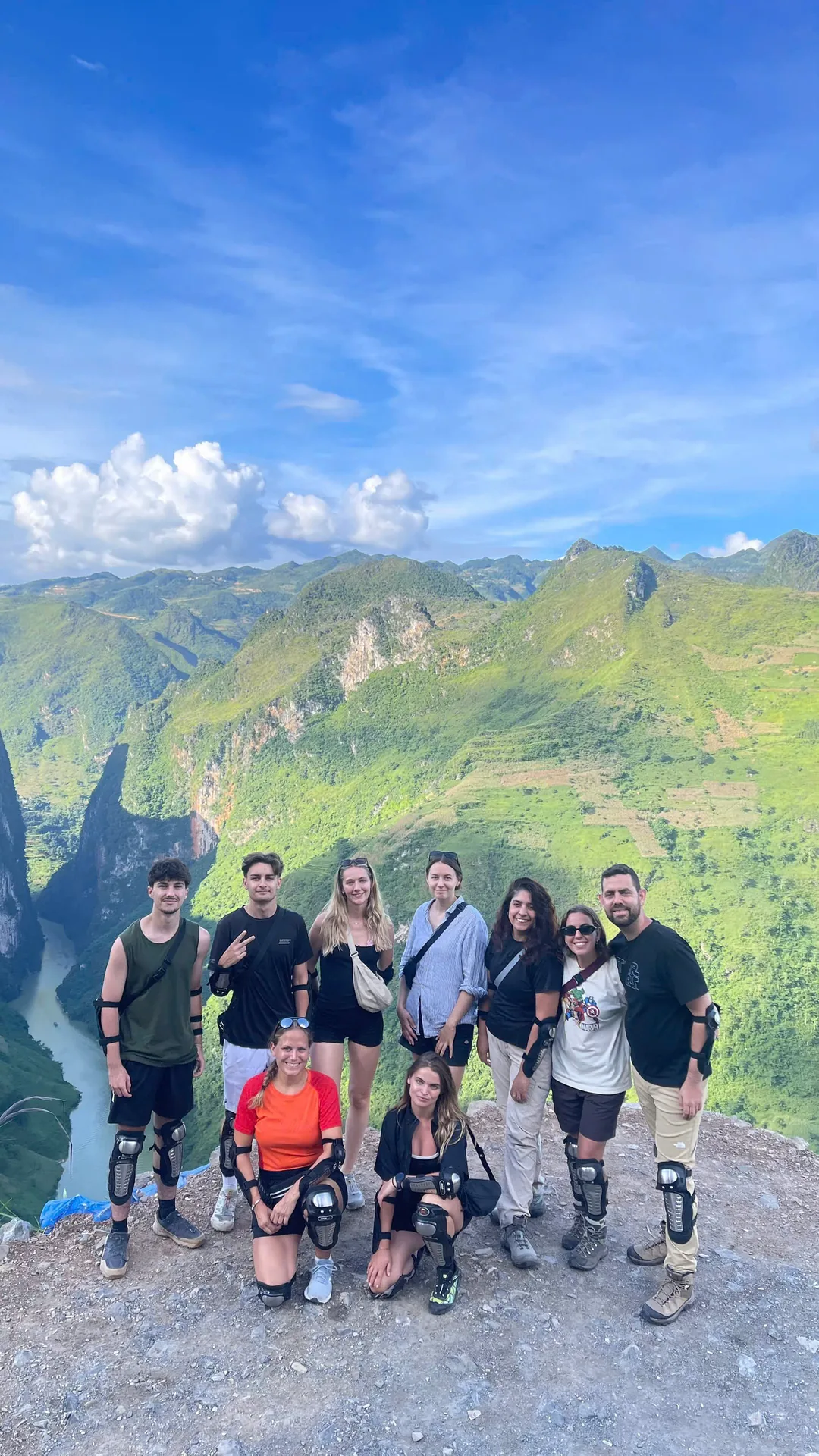
We think that instinct is exactly right. The Loop is a ring of mountain roads that climbs from Ha Giang city onto the Dong Van Karst Plateau, a UNESCO Global Geopark of grey limestone, deep river gorges and H'mong, Tay, Dao and Lo Lo villages. It is one of the most beautiful road trips on the planet. It is also a real mountain road, with real consequences when things go wrong.
This article is not written to scare you, and it is not written to sell you a bike. It is written by people who ride these passes every week, and who would rather you arrive prepared than arrive confident.
Are there deaths on the Ha Giang Loop?
Yes. Riders, both foreign and Vietnamese, have been killed on the Loop, and serious injuries happen far more often than deaths do. Anyone who tells you otherwise is either new here or selling something.
What we cannot give you is a reliable number. There is no public, regularly updated register of tourist accidents for this specific route. Crashes are recorded by different district hospitals and police stations, many minor injuries are never reported at all, and travellers who get patched up and continue their trip never appear in any count. So when a website quotes a precise total of Loop deaths per year, treat it as a guess dressed up as a statistic.
The honest position is simple: fatal accidents are real but rare, injuries are common, and almost all of them trace back to a handful of avoidable causes. That is the useful part, because avoidable causes can be avoided.
What actually makes the route risky
The danger is not one cursed corner. It is the way several ordinary factors stack up at the same time.
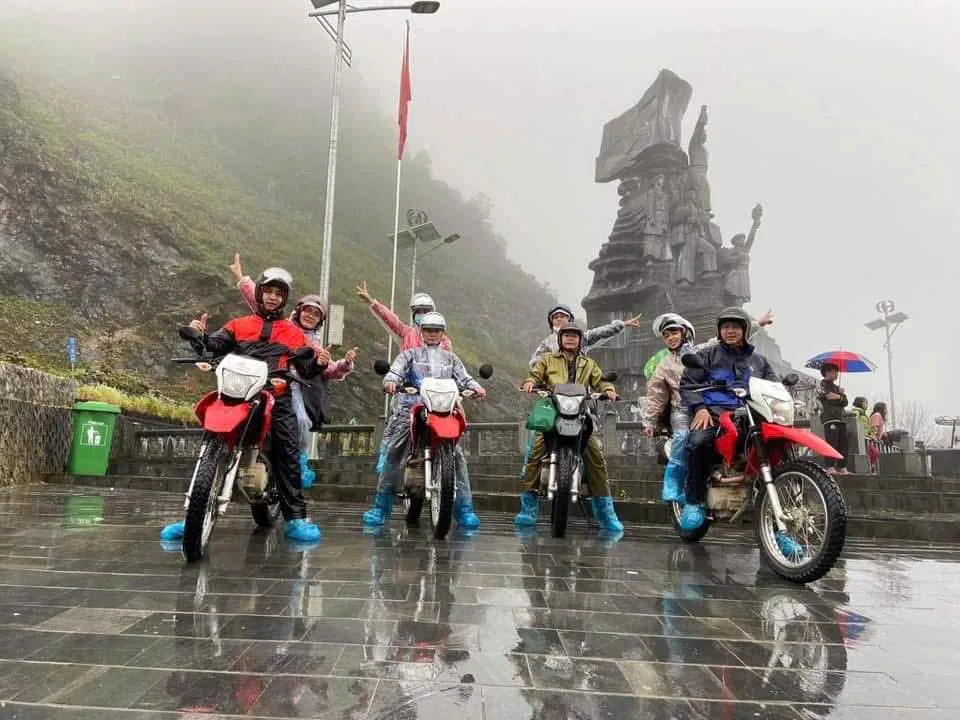
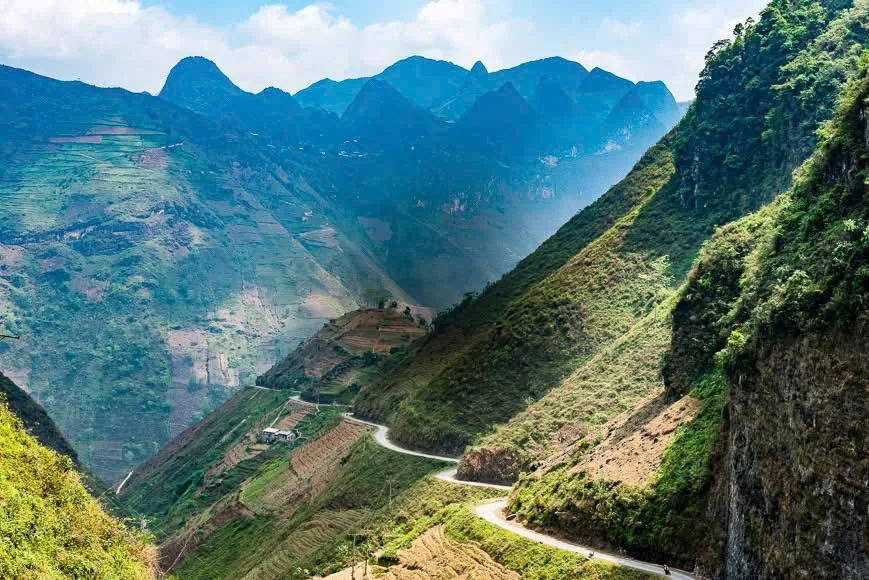
The road itself. Between Ha Giang city and Meo Vac you cross a series of passes: Bac Sum, Quan Ba Heaven Gate, Can Ty, Tham Ma with its stacked hairpins, and finally Ma Pi Leng, which is cut into a cliff face high above the Nho Que River. The surface is mostly paved, but you will meet gravel washed onto bends, patches of fresh roadworks, potholes on descents and the occasional landslide scar. Many corners are blind. Many have no barrier.
Traffic you do not expect. Trucks use these roads to supply the border districts, and they need the whole lane on a hairpin. Local riders know every bend and take them faster than you will. Water buffalo, goats, chickens, dogs and children step out of villages without looking, because to them the road is a footpath.
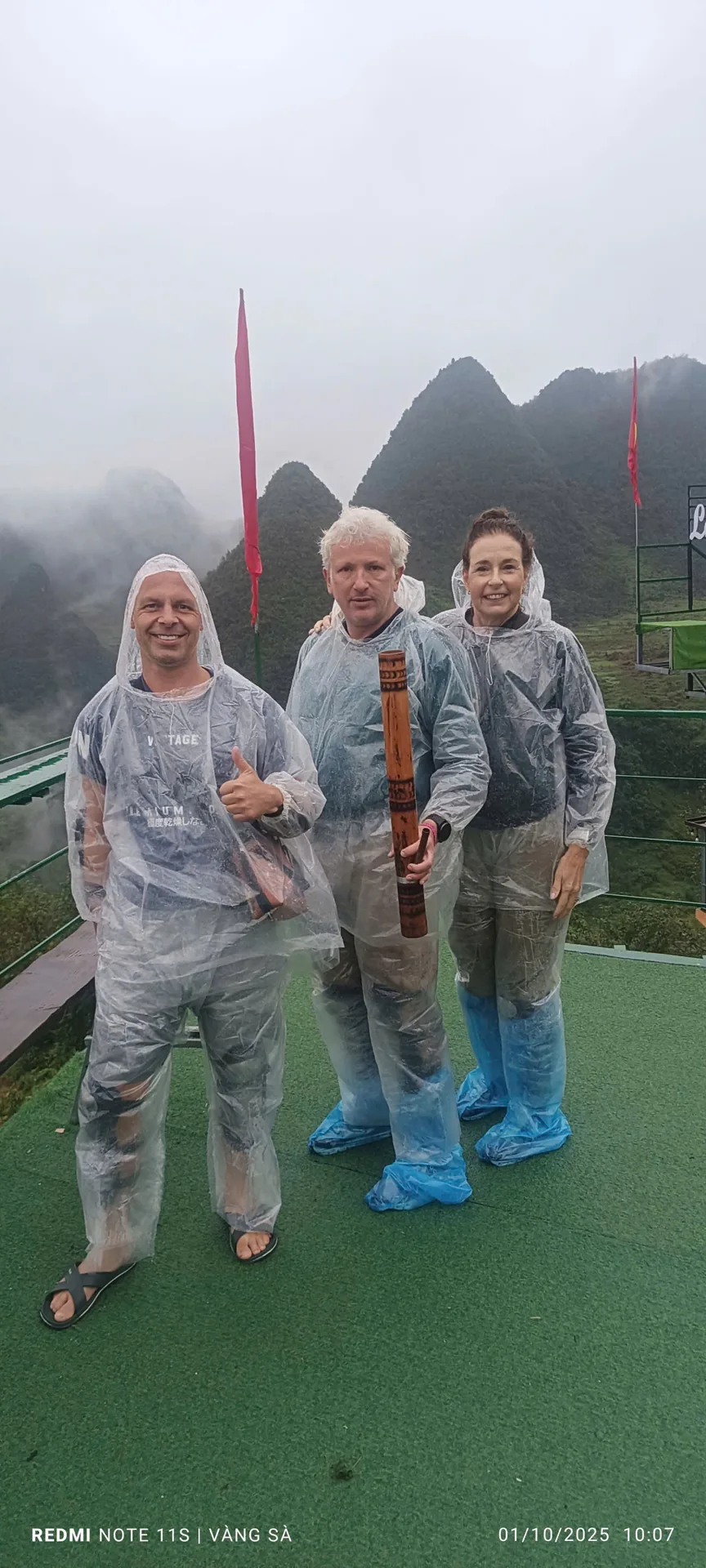
Weather that turns in minutes. The plateau sits above a thousand metres. Fog can drop visibility to a few bike lengths in the middle of a sunny day. A summer storm can flood a stretch of road, then leave it slick with mud. From December to February the cold is wet and grey, and an unheated rider loses concentration long before they notice they are losing it.
Distance that lies. A hundred and fifty kilometres on a map is a morning on a motorway. On the Loop it is a full day, because nothing is straight, nothing is flat and you will stop every twenty minutes for a view. Fatigue arrives in the late afternoon, which is exactly when the light fades and the road empties of witnesses.
The biggest mistake: riding beyond your experience
If we had to name the single thread running through most Loop accidents, it would be this: a rider who was competent somewhere else assumed they were competent here.
Having rented a scooter on a beach in Thailand or commuted through a flat European city does not prepare you for a 12 percent descent into a blind hairpin with a truck coming the other way. Mountain riding is a specific skill set. It needs smooth braking on a downhill slope, the discipline to enter every corner slower than feels necessary, an eye for gravel, a feel for a wet surface and, above all, the calm to make a good decision when something surprises you.
Add a semi-automatic bike you have never ridden, a pillion passenger and a phone in one hand filming the view, and the margin disappears.
If any part of you feels uneasy about riding, listen to it. That unease is not weakness; it is accurate self-assessment, and it is the reason our Easy Rider option exists. You still ride every metre of the Loop on a motorbike, in the open air, with the same views. The difference is that the person on the front has ridden these passes hundreds of times and knows where the gravel collects and where the fog sits.
No photograph is worth an air ambulance that, out here, does not exist.
Licence rules: what the law really says
Riding legally is part of riding safely, and the two are checked together on the Loop.
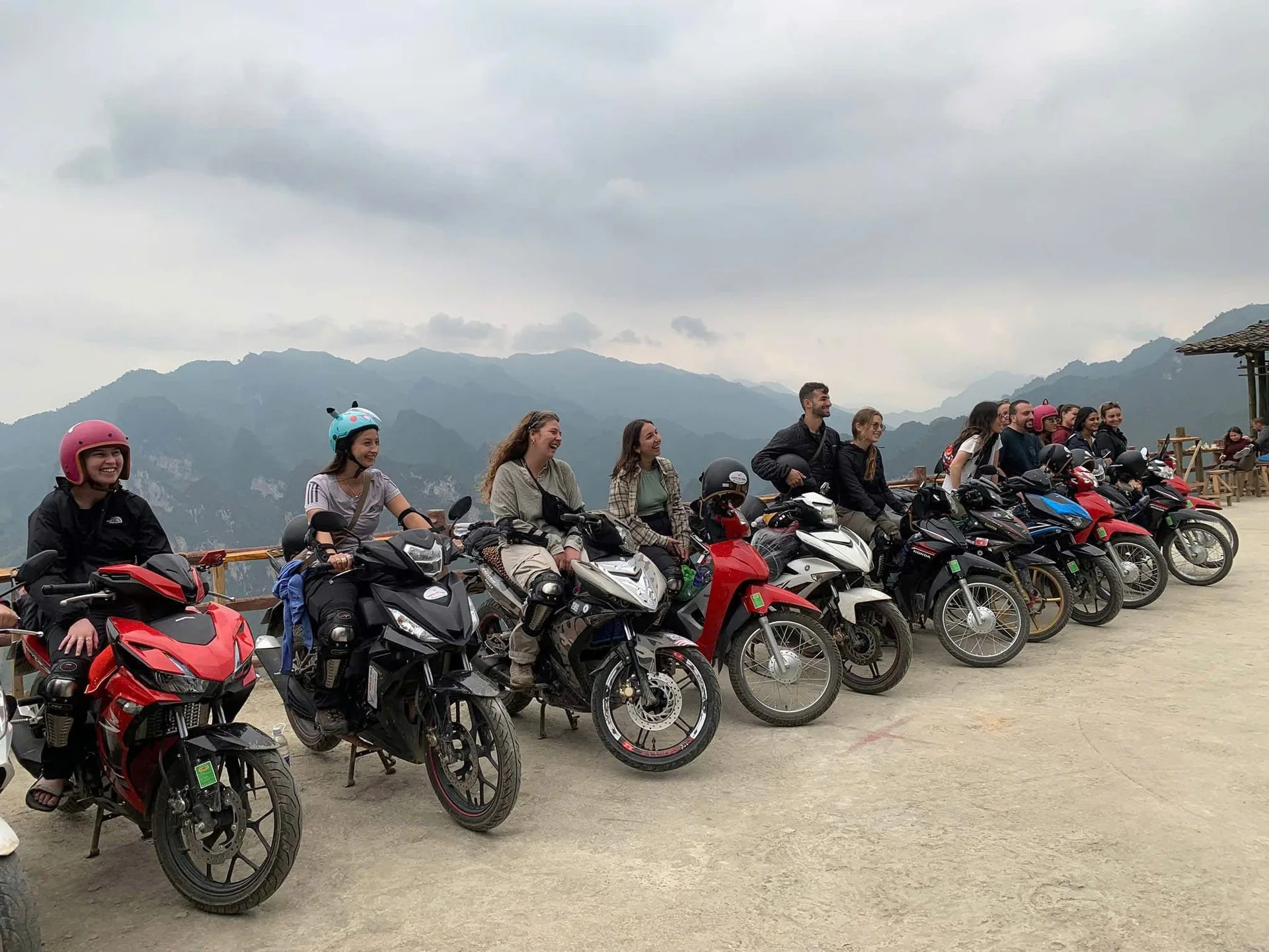
Vietnam recognises International Driving Permits issued under the 1968 Vienna Convention. To ride a motorbike yourself you need that IDP, with category A or A1 for motorcycles, together with your national driving licence. Both documents, at the same time. An IDP under the older 1949 convention is not accepted, and a car-only licence does not cover a bike, however small.
This matters for two reasons. The first is that police run checkpoints on the Loop, particularly around Ha Giang city and the plateau towns, and riders without the correct papers are fined and can have the bike held. The second is quieter and more serious: if you crash without a valid licence, most travel insurance policies will refuse the claim. A helicopter evacuation is not an option here; a private ambulance to Hanoi is, and it is expensive.
So before you book a self-riding tour, check honestly:
- Is my IDP issued under the 1968 convention, and does it show category A or A1?
- Am I carrying my national licence as well?
- Does my travel insurance specifically cover riding a motorbike, and does it require a licence?
If any answer is no or unclear, do not gamble. Book Easy Rider, or share a bike with a licensed friend on our seat-behind option. Every one of our tours is available without a licence for exactly this reason.
What global road-safety guidance looks like on a mountain pass
The World Health Organization keeps returning to the same list of factors behind road deaths: speed, alcohol, missing or poor helmets, distraction, unsafe roads and slow post-crash care. Every one of those has a very specific face on the Loop.
Speed. On a hairpin, the difference between 30 and 45 km/h is the difference between a wobble and a trip over the edge. There is no prize for arriving in Dong Van early.
Alcohol. Homestay rice wine is part of the experience, and hosts will pour generously. Drink in the evening, never at lunch, and never before you get back on a bike.
Helmets. The thin plastic bowl that comes free with a cheap rental will crack on the first impact. We fit every guest with a proper helmet and protective gear before departure, and we adjust it until it actually fits.
Distraction. Filming while riding is the most common thing we see just before a near miss. Put the phone away; your guide will stop at every viewpoint that matters.
Post-crash care. This is the one travellers underestimate. There are district hospitals in Dong Van, Meo Vac and Yen Minh that can stabilise you, and a provincial hospital in Ha Giang city. Anything serious means a road transfer to Hanoi, roughly 300 kilometres and six or more hours away. Out here, the best emergency plan is not crashing in the first place.
Easy Rider, self-riding or seat-behind: which is safest?
There is no single right answer, only the right answer for you.
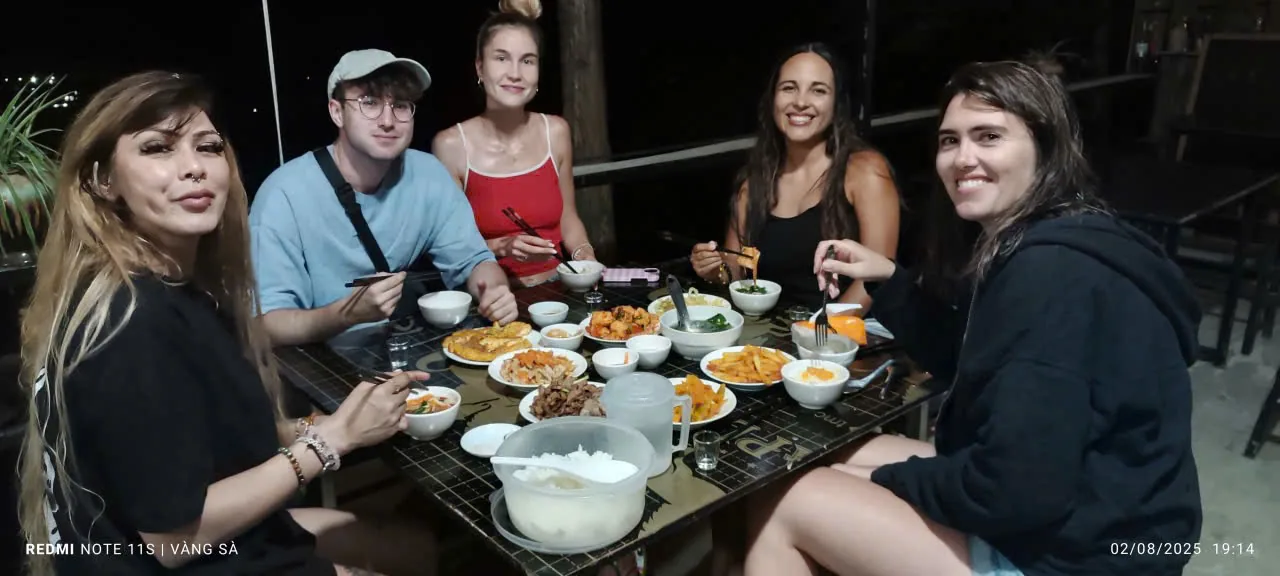

Easy Rider. You sit behind a local driver who does this for a living. It is the safest way to experience the Loop by a wide margin, needs no licence, and it is what we recommend to first-time riders, nervous riders, anyone travelling in the rainy season and anyone who wants to spend the ride looking at the mountains instead of the tarmac. It is also, quietly, the option most of our guests end up choosing and being glad they did.
Self-riding. For experienced, licensed motorcyclists who understand mountain roads, riding your own bike is a genuine joy. It is available on our 3-day and 4-day Loops. You ride in a small group behind a guide who sets a sensible pace, warns you about the sections ahead and decides when the weather says stop.
Seat behind a friend. If your travel partner is licensed and confident, you can share their bike and pay only the seat-behind price. You get the same tour, the same homestays and meals, and you never have to touch a throttle.
Our rule of thumb has not changed in years: if you are not sure you should self-ride, you should not self-ride. The passes are just as spectacular from the back seat.
How to choose a safer operator
Price is the first thing most people compare, and it is the least useful. Two tours that cost the same can differ enormously in how they handle the bit that matters: keeping you alive.
Ask any operator, including us, these questions before you pay:
- How much experience do your drivers have on these specific roads?
- Is there a proper safety briefing, and are helmets and gear checked on every guest?
- How are the bikes maintained, and how old are they?
- How big are your groups, and is there an English-speaking guide in every one?
- What happens when fog or a storm rolls in? Who decides to stop?
- If I feel unsafe halfway through, can I switch from riding to sitting behind a driver?
A serious operator will answer all of these without hesitation. A less serious one will change the subject to how cheap the beer is.
For what it is worth, here is how we answer them. Every Freedom group leaves Ha Giang city after a briefing and gear fitting. Every group has an English-speaking guide. We keep groups small so the guide can actually see everyone in their mirror. Travel insurance, helmet, protective gear and a rain coat are included, and if you start the day riding and lose your nerve, we would far rather move you behind a driver than watch you push on.
A practical checklist before you ride
Before you leave
- Confirm your licence situation and your insurance cover, in writing if you can.
- Choose your riding style honestly, not to impress anyone.
- Pack real layers: the plateau can be fifteen degrees colder than Hanoi.
- Bring any personal medication and a small first-aid kit.
- Download offline maps and save the number of your guide.
- Carry cash; ATMs are thin on the ground beyond Yen Minh.
On the road
- Ride slower than feels natural, especially downhill and in the wet.
- Leave a long gap to the bike in front.
- Never film or check your phone while moving.
- No alcohol before or during riding hours.
- Tell your guide immediately if you feel tired, cold or unsafe.
- Be off the road before dark, without exception.
- Slow to walking pace through villages and around animals.
Every evening
- Eat properly, drink water, and go easy on the rice wine.
- Mention any pain, dizziness or anxiety to your guide, even if it feels minor.
- Check the forecast and set out your gear for the morning.
None of these items is dramatic. Safety on the Loop is a few hundred small, boring decisions repeated all day.
Season by season: when the risk changes
The Loop is open all year, but it is not the same road in every month.
- October to November is the sweetest window: dry, clear and cool, with buckwheat flowers on the plateau. Roads are at their best.
- December to February brings cold, fog and drizzle. Views come and go, and grip on the passes drops. A good time to choose Easy Rider.
- March to May is warm and often clear, with peach and plum blossom in the villages early on. Very rideable.
- June to September is the rainy season. Afternoon storms, mud on the road and the possibility of landslides make this the riskiest period for self-riding. The valleys are at their greenest and the rice terraces turn gold in September, so we still run tours, but we start earlier, watch the sky and change the route when it tells us to.
Riding with respect for the people who live here
Behind every search about accidents there is another question that matters just as much: what kind of visitor do you want to be?
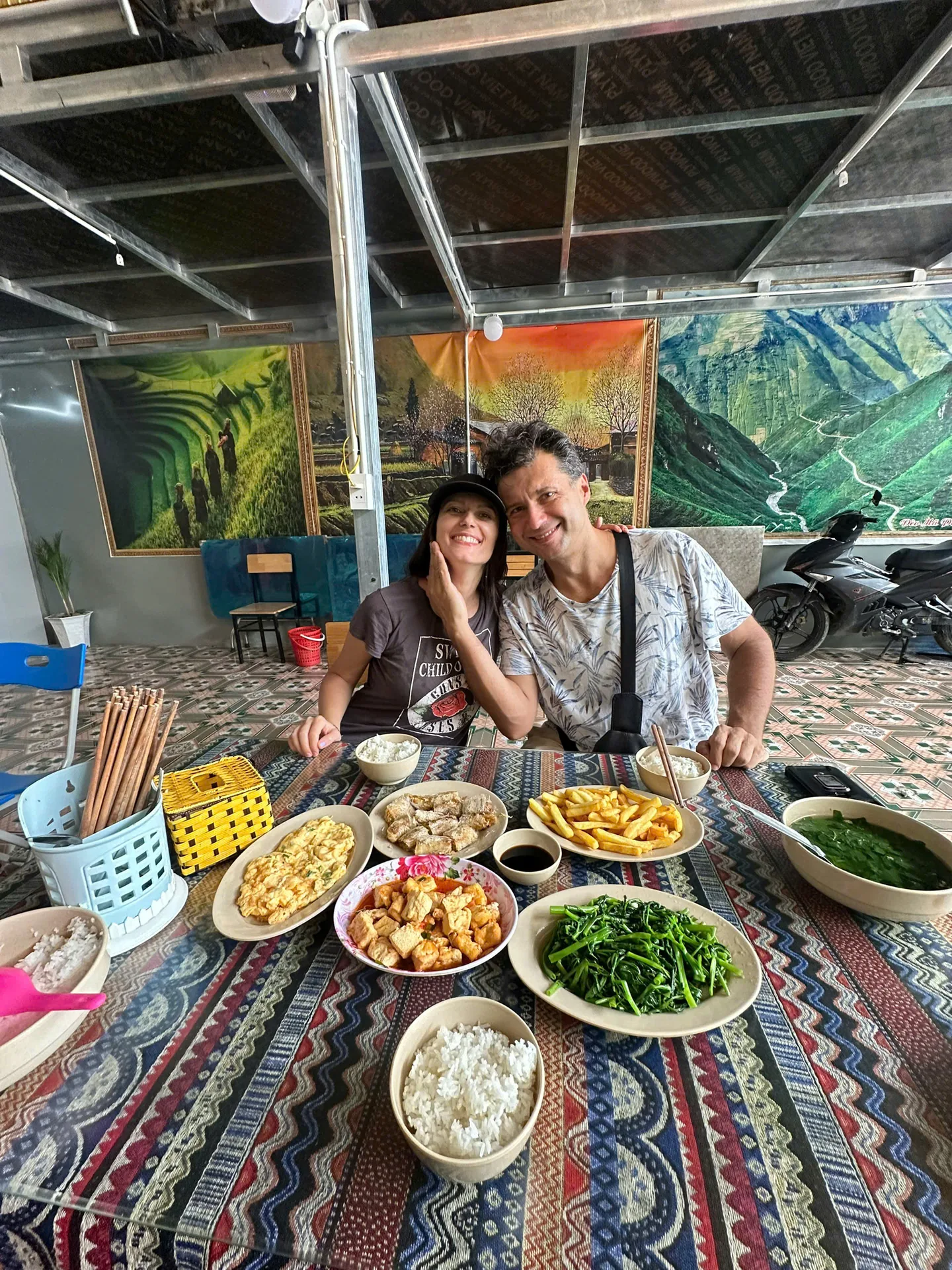
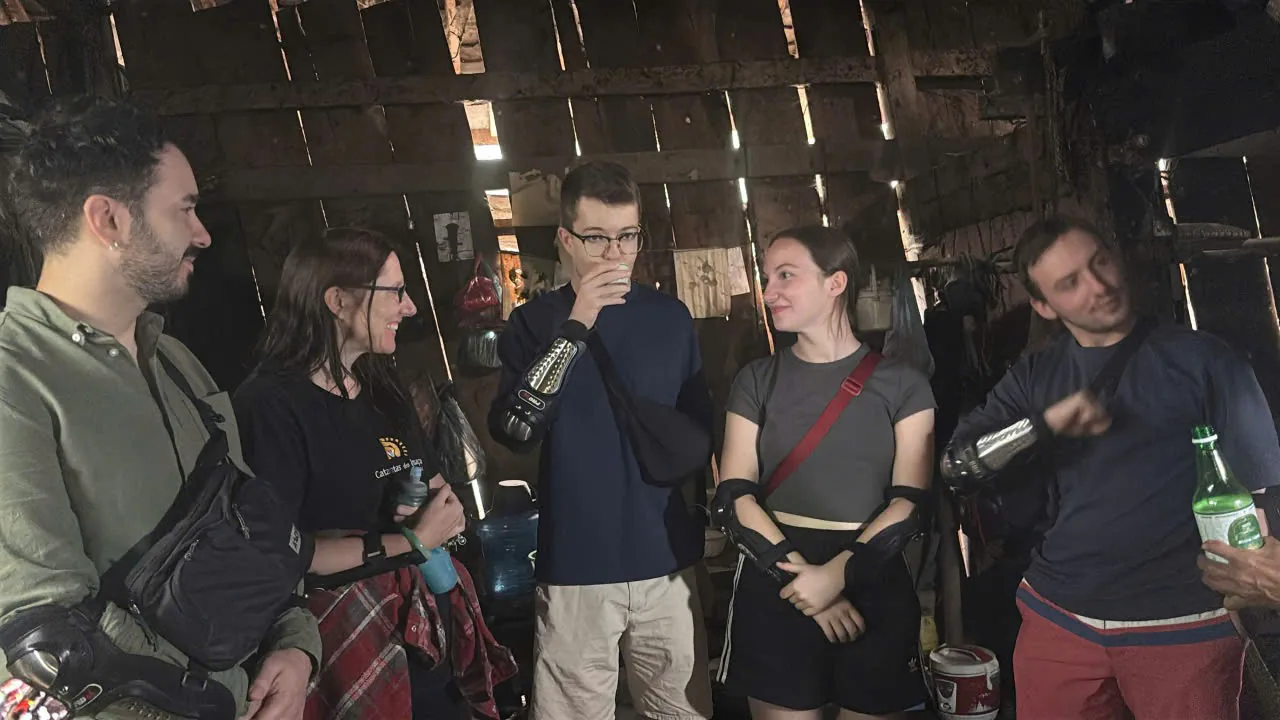
Ha Giang is not a track laid out for tourists. It is home to farmers, weavers, schoolchildren and grandmothers who use the same road you are photographing. When you slow through a village, wave, stop for a buffalo and buy your water from a family shop instead of a chain, you are being safe and being decent at the same time. The two overlap almost completely.
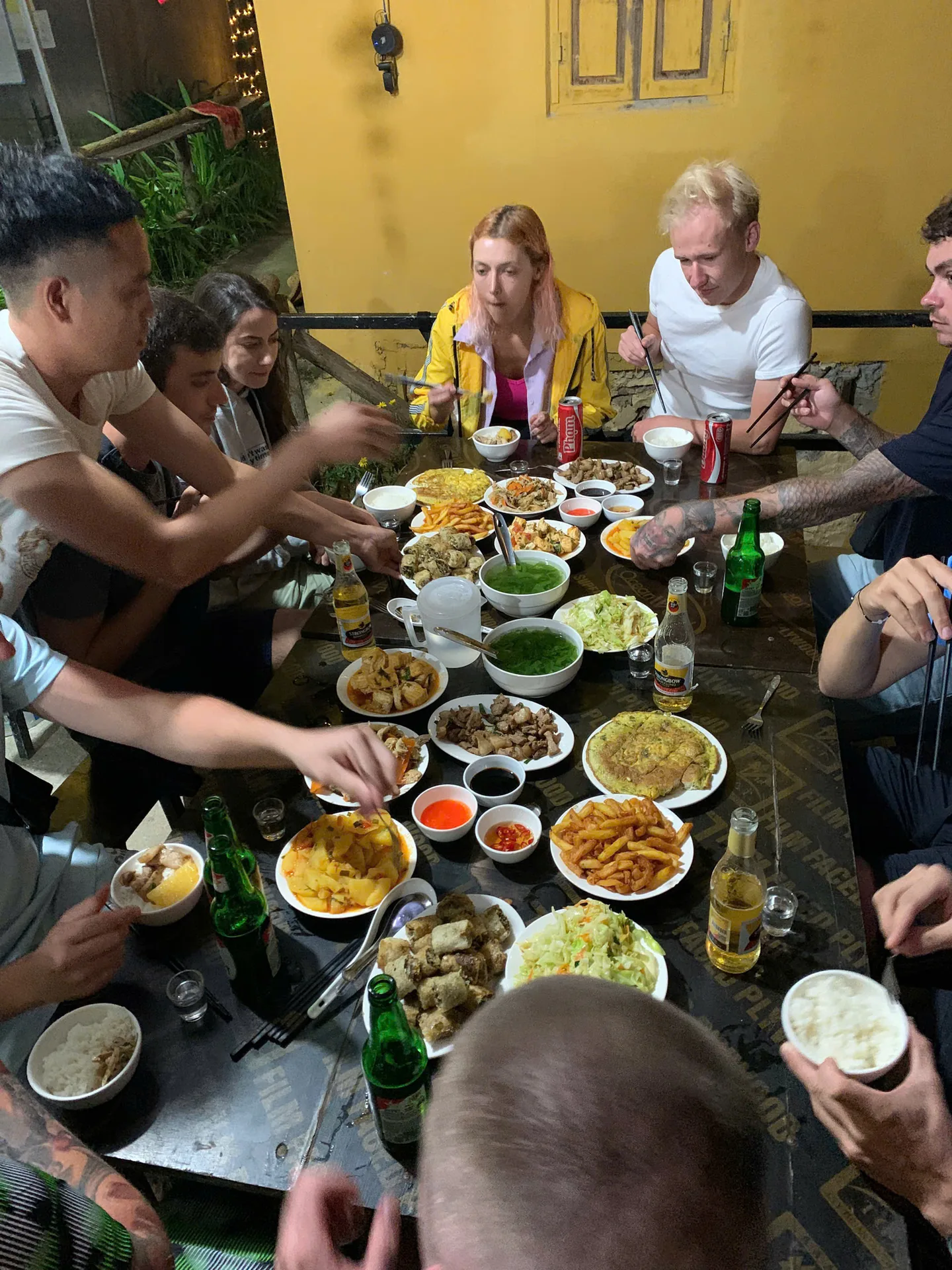
That is also why our tours sleep in family homestays in Du Gia and Dong Van, eat what the family cooks and travel in small groups. It is better for your safety, it is better for the people hosting you, and it is a great deal more fun than a hotel.
So, should you still do the Ha Giang Loop?
Yes. Most travellers can and should, and they come home with the best three or four days of their trip.
But go into it with your eyes open. Do it if you are prepared to ride slowly, to follow your guide, to respect the weather and to choose the riding style that fits your real experience rather than your idea of yourself. Do not self-ride if you lack the licence, lack the miles, are being talked into it by friends or plan to treat the passes as a race.
The best version of the Loop is the slow one: the one where you stop at the top of Ma Pi Leng long enough to hear the river, where you sleep under a Tay family's roof in Du Gia, where you climb the Lung Cu flag tower and look across the border, and where you roll back into Ha Giang city tired, safe and slightly changed.
The mountains will still be there next year. Make sure you are too.
FAQ
Are there deaths on the Ha Giang Loop? Yes, fatal accidents have happened. There is no reliable public total, so be sceptical of any site that quotes a precise number.
Is the Ha Giang Loop dangerous? It is a serious mountain road with blind corners, steep gradients, trucks, livestock and fast-changing weather. With the right riding style, a good guide and a sensible pace, the risk is manageable.
Can a beginner self-ride the Loop? We do not recommend it. Learn on flatter roads first; ride the Loop as an Easy Rider passenger this time.
What is the safest way to do the Loop? Easy Rider, sitting behind an experienced local driver. Seat-behind-a-friend is equally safe for you as a passenger, as long as your friend is licensed and experienced.
Do I need a licence to ride a motorbike in Vietnam? Yes. To self-ride you need an International Driving Permit under the 1968 convention, category A or A1, plus your national licence. No licence is needed for Easy Rider or seat-behind.
What causes most accidents on the Loop? Speed into corners, inexperience with mountain roads, wet or gravelly surfaces, fatigue late in the day, alcohol, filming while riding and riding after dark.
Is Easy Rider really safer than self-riding? For anyone without solid mountain-riding experience, yes, by a long way.
Should I ride in the rainy season? You can do the Loop from June to September, but we strongly recommend Easy Rider rather than self-riding during those months.
How does Freedom keep guests safe? Small groups, an English-speaking guide in every group, a briefing and gear fitting before departure, quality helmets and protective gear, included travel insurance, and guides who change the route or the pace when the weather demands it.
Where do the tours start? From our base in Ha Giang city. Pick-up from Hanoi, Sapa, Ninh Binh, Cat Ba and Ha Long is included.
Ready to ride it the safe way? Our 2, 3 and 4-day Loops are all available as Easy Rider, with self-riding and seat-behind options on the 3 and 4-day tours. Compare them on our pricing page, or message us on WhatsApp at +84 973 910 970 and tell us your experience level; we will tell you honestly which option fits.
More stories
10 Aug 2026
Freedom Ha Giang Loop: Why Ride Vietnam's Mountain Road With Us
What a Ha Giang Loop with Freedom actually looks like: three ways to ride, small groups with their own guide, family homestays, proper gear, pick-up from Hanoi and a safety-first pace.
Read more →10 Aug 2026
Ha Giang Loop Adventures: A Complete Guide to Riding Northern Vietnam
Everything we tell our own guests before they ride the Ha Giang Loop: the route through the Dong Van Geopark, Ma Pi Leng and the Nho Que River, the people along the road, how many days to take, and whether to ride yourself or sit behind a local Easy Rider.
Read more →10 Aug 2026
The Ha Giang Loop Road: Conditions, Safety and Why This Mountain Road Teaches You to Travel Slowly
What the Ha Giang Loop road is really like: surfaces, weather, blind corners, the people who live beside it, and why the road itself ends up being the best guide you have.
Read more →