
08 Aug 2026
Tu San Canyon: The Complete Nho Que River Travel Guide
Tu San CanyonNho Que RiverMa Pi Leng PassDong Van GeoparkHa Giang Loop
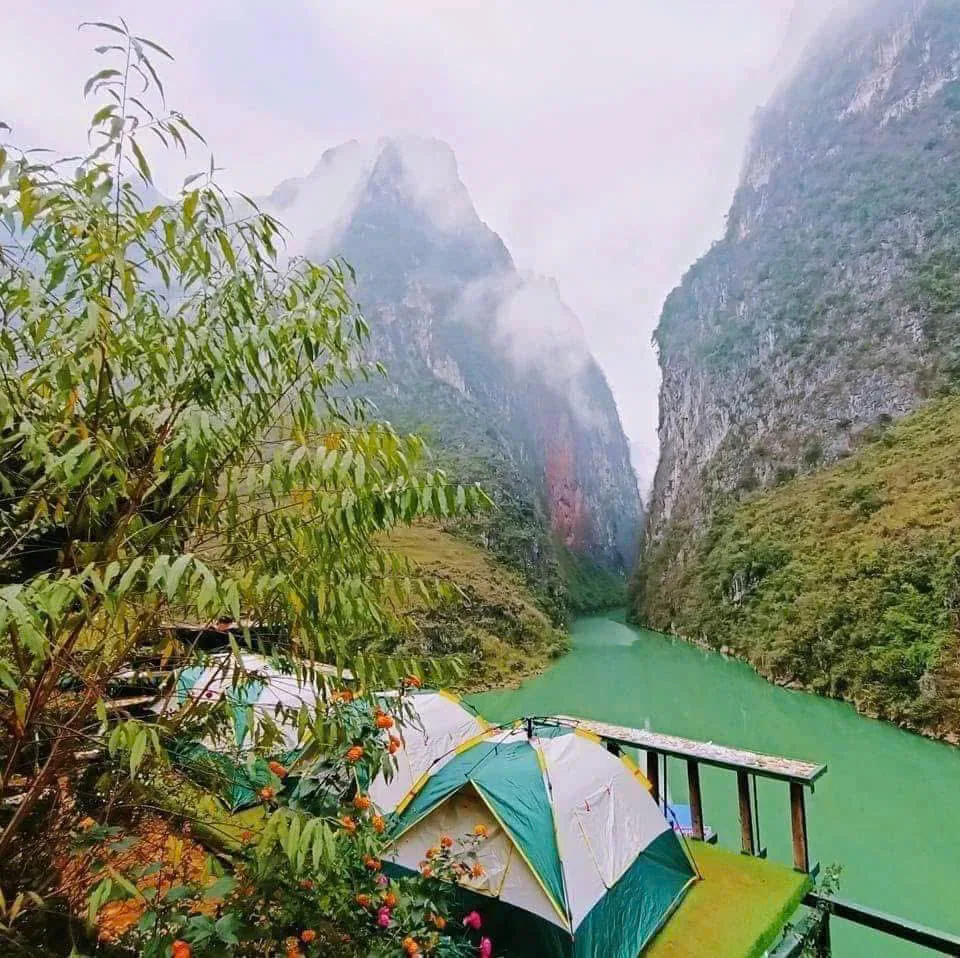
Tu San is the part of the Ha Giang Loop that you feel rather than photograph. Below Ma Pi Leng Pass the Nho Que River has cut a slot through the limestone so deep that from the road it looks like a crack, and from the water it looks like the end of the world. Here is what you need to know before you go down into it.
Quick Facts
- Where: beneath Ma Pi Leng Pass, between Dong Van and Meo Vac, inside the Dong Van Karst Plateau UNESCO Global Geopark.
- River: the Nho Que, flowing in from China's Yunnan province.
- Depth: the canyon walls stand in the range of 700 to 800 metres above the water.
- Length: the narrowest, most dramatic section is a little under two kilometres, the part the boats enter.
- Main experience: a motor boat (or kayak) upstream from the piers on the river, plus the view from the pass above.
- When Freedom goes: afternoon of day two on our 3-day and 4-day Loops.
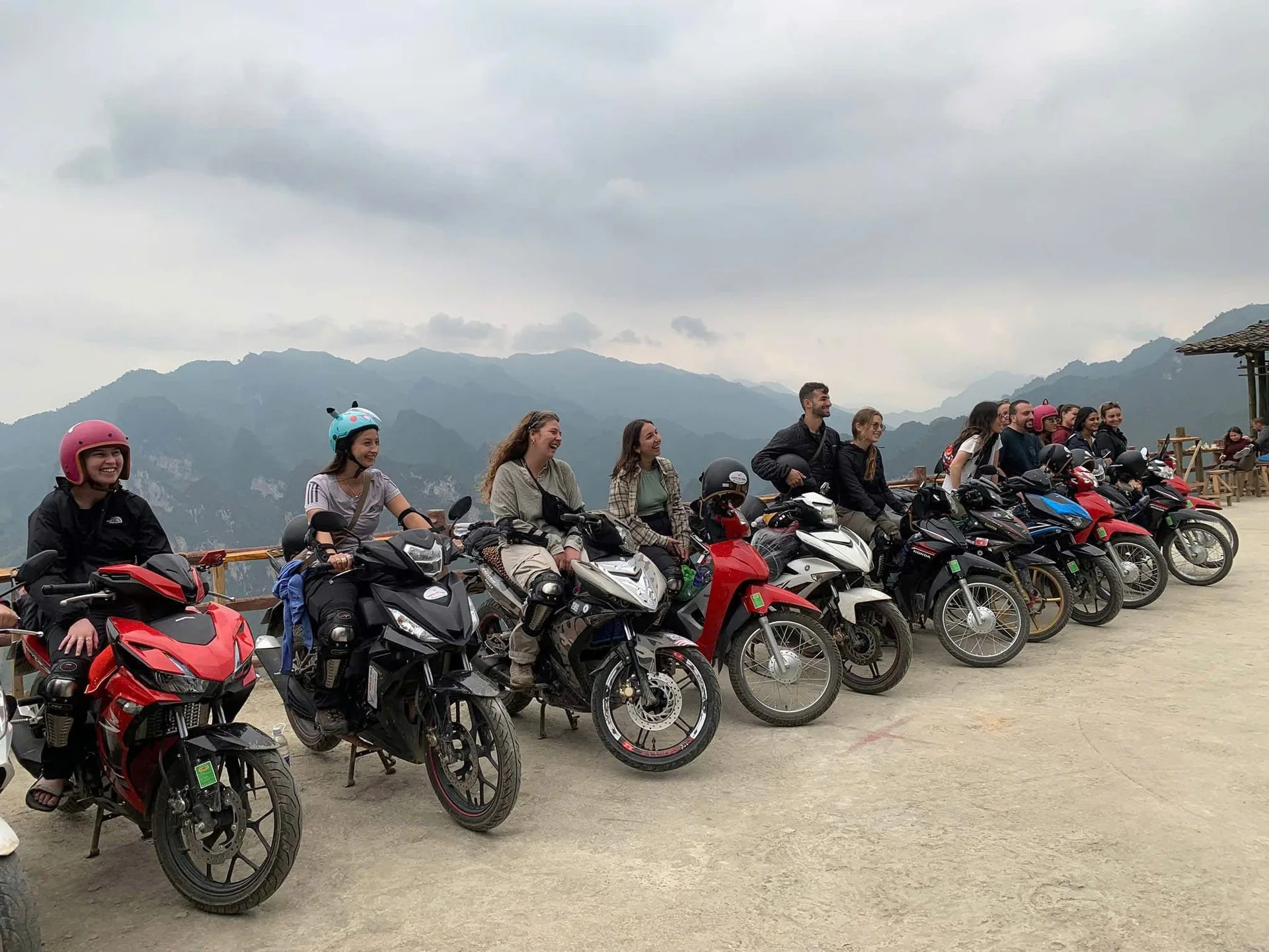
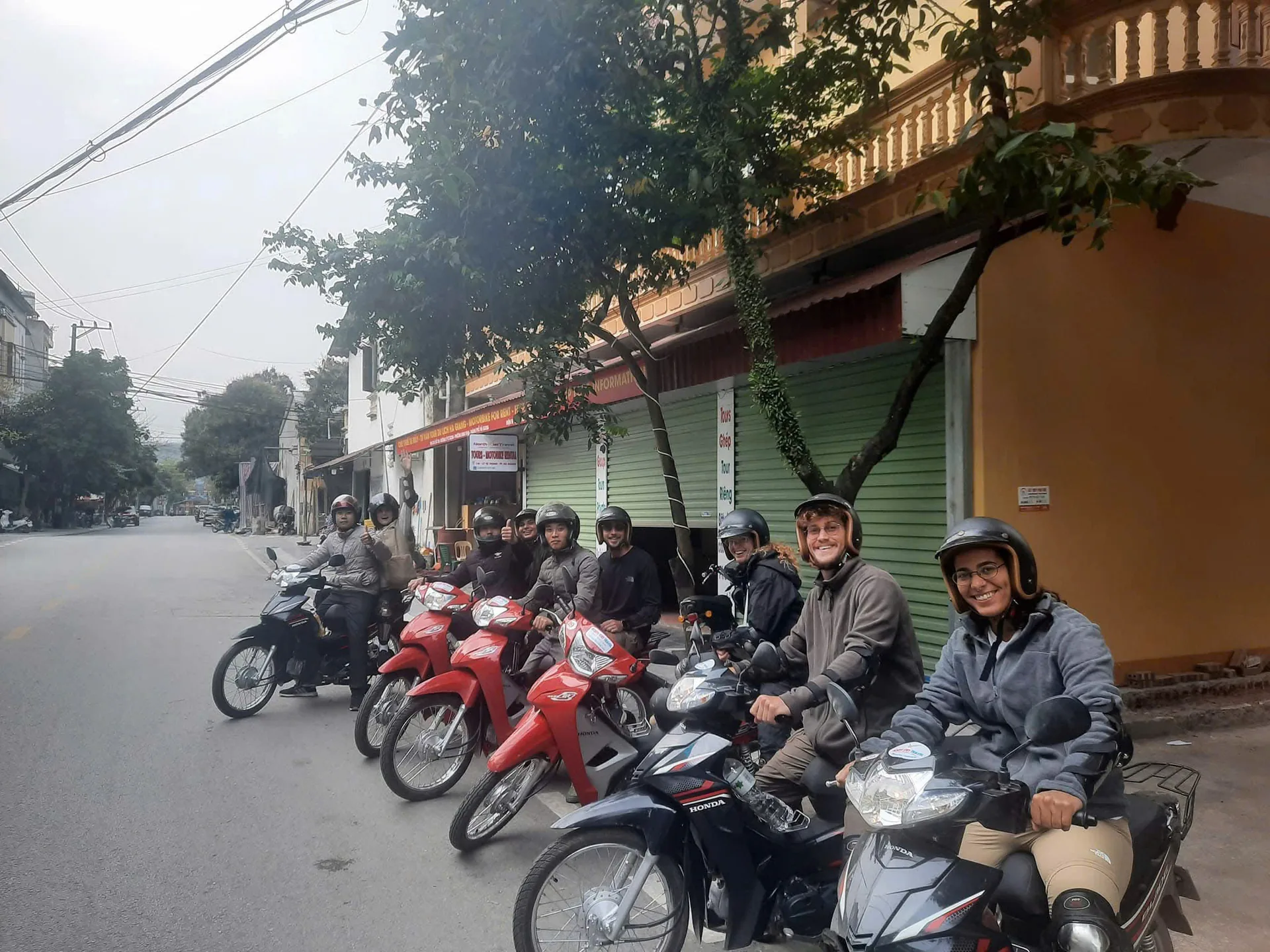
- How you ride there: Easy Rider, self-riding with a valid licence, or a seat behind a friend.
Why Tu San Canyon Is So Special
The first thing you notice is that the cliffs do not stand beside the river; they lean over it. Down on the water the sky shrinks to a ribbon and the sound of the engine bounces back at you from both sides.
A word on numbers, because you will read wilder ones elsewhere. Tu San is often called the deepest canyon in Southeast Asia. The careful description is that it is among the deepest, with walls of roughly 700 to 800 metres. Either way, it is the deepest thing you will see on the Loop by a long margin, and standing at the bottom you will not be checking the figure.
The geology is the other half of the story. The Dong Van plateau is limestone laid down under ancient seas hundreds of millions of years ago and then lifted, folded and dissolved by rain. The Nho Que simply kept cutting down as the plateau rose, and Tu San is the result: a river that stayed put while the mountain grew around it. What you see today is one frame of a process still running.
Ma Pi Leng Pass: The Best View From Above
Before you go down, look down. The pull-outs along Ma Pi Leng Pass, especially the main viewpoint near the road builders' memorial and the stretch above the M slope, look straight into the canyon with the river curled through the bottom. From up here the boats are white specks and the walls look like folded grey paper. Cloud shadows slide across the cliffs, and on clear days ridge after ridge fades into the distance towards the border.
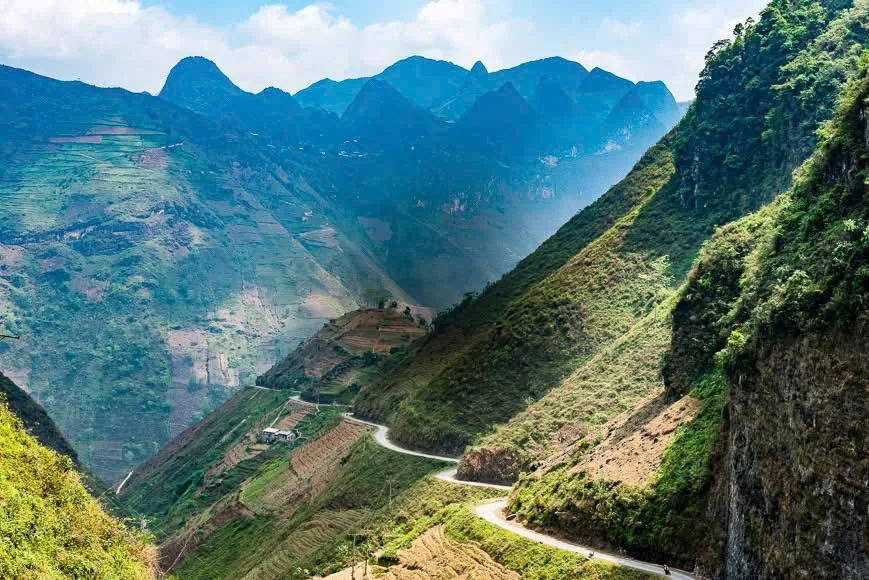
Two rules we enforce at every viewpoint. Park only in the marked bays, never in the lane on a bend, because trucks come round those corners using the whole road. And do not climb the barriers or onto loose rock for a picture. The photograph from the safe side is just as good.
Fog is part of the deal up here. A view can vanish in five minutes and come back in fifteen. If it is white when we arrive, we have tea at the family stall and wait.
Best Time to Visit the Nho Que River Gorge
- Spring (February to April): mild days, fresh green on the slopes, blossom in the villages. Good clarity for the view from above.
- Summer (May to August): the richest greens and the fullest river, sometimes so full after storms that the boats pause. Also the wettest season, with slippery roads and cloud on the pass.
- Autumn (September to November): the most comfortable riding, mostly dry skies, and from October the buckwheat flowers spread pink and white across the Dong Van plateau above the canyon.
- Winter (December to January): cold, quiet, often misty in the gorge until late morning. Beautiful if you dress for it.
Whatever the month, check the forecast a day or two out and stay flexible; the mountains do not keep appointments.
How the Canyon Fits the Ha Giang Loop
Tu San sits on the classic Dong Van to Meo Vac stretch, so every Loop passes above it. The question is whether you go down to the water, and that comes down to time.
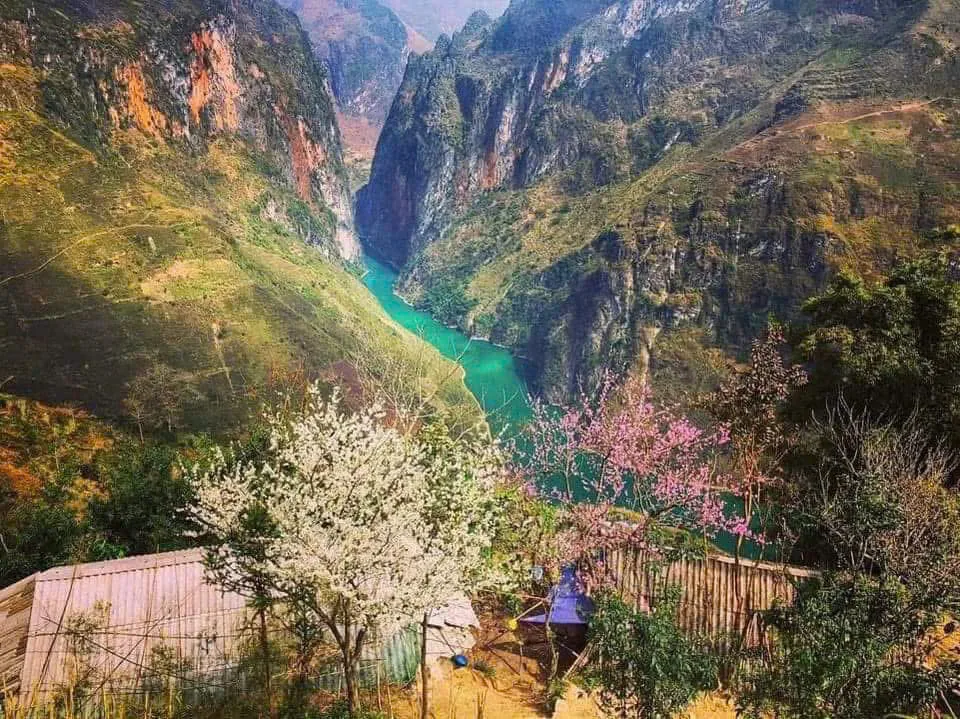
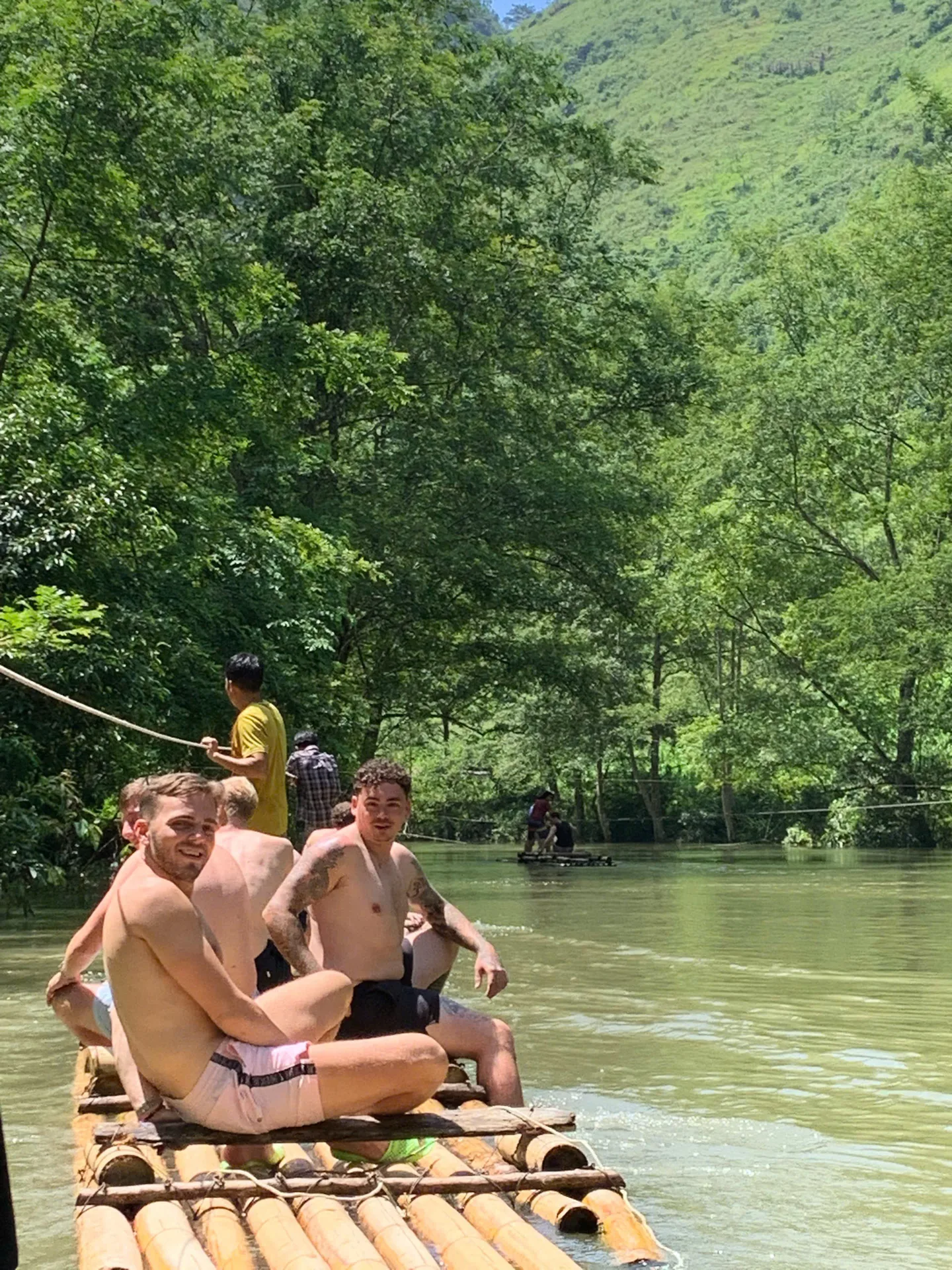
On our 2-day express Loop you see the canyon from Ma Pi Leng on the second morning; there is no room for the boat. On the 3-day and 4-day Loops we come in from the quieter Du Gia side, spend the morning of day two rafting the Hangtham Lin River, then climb to the Meo Vac viewpoint, ride through the bamboo forest and drop to the Nho Que for the boat before riding the pass into Dong Van for the night. The 4-day Loop then adds a full day for Lung Cu flag tower, Lo Lo Chai and the Lao Xa ancient house, so nothing is rushed.
Our honest advice: if the canyon is the reason you are coming, take at least three days.
Easy Rider or Self-Ride?
The road from the pass to the boat piers is the steepest, twistiest regular descent on the whole Loop, and it carries boat-trip traffic in both directions. That shapes our advice.
Easy Rider. You sit behind a local driver who rides this hill every week. No licence, no experience, no stress. This is what most of our guests choose and what we recommend for anyone without solid manual-bike experience.
Self-riding. Available on the 3-day and 4-day Loops if you hold an International Driving Permit issued under the 1968 convention (category A or A1) together with your national licence. Police checkpoints on the Loop ask for both. Being able to hire a bike does not make you legal to ride it, and without the right licence your insurance will not pay out after a crash.
Seat behind a friend. Share the bike of a companion who books the self-riding option and pay only the seat price.
We are a motorbike company and only a motorbike company; two wheels is the only way we offer the Loop.
Leaving the Canyon as You Found It
Tu San looks indestructible and is not. We keep it simple: nothing goes into the river from the boat, every wrapper comes back up the hill with us, we ask before photographing the boat crews and the families at the pier, and we buy our drinks from them. We leave the rocks, fossils and plants of the geopark exactly where they are. A canyon that took millions of years to cut deserves a visitor who takes five seconds to find a bin.

Conclusion
Tu San canyon is two experiences for the price of one. From Ma Pi Leng it is enormous but distant, a diagram of the landscape. From the Nho Que it is close and overwhelming, walls rising straight out of the water. The change of scale between those two views is the whole point, and it is why we build a full afternoon around it rather than a ten-minute photo stop.
Look down from the pass. Then look up from the river. Somewhere between the two you will understand why people ride all the way to the Chinese border for this.
Ride to Tu San With Freedom
The boat into Tu San canyon and the ride over Ma Pi Leng are both included on our 3-day and 4-day Ha Giang Loops. See prices and riding styles on our pricing page, or message us on WhatsApp at +84 973 910 970 and we will help you plan it.
More stories
10 Aug 2026
Freedom Ha Giang Loop: Why Ride Vietnam's Mountain Road With Us
What a Ha Giang Loop with Freedom actually looks like: three ways to ride, small groups with their own guide, family homestays, proper gear, pick-up from Hanoi and a safety-first pace.
Read more →10 Aug 2026
Ha Giang Loop Adventures: A Complete Guide to Riding Northern Vietnam
Everything we tell our own guests before they ride the Ha Giang Loop: the route through the Dong Van Geopark, Ma Pi Leng and the Nho Que River, the people along the road, how many days to take, and whether to ride yourself or sit behind a local Easy Rider.
Read more →
10 Aug 2026
Ha Giang Loop Deaths: The Safety Facts to Know Before You Ride
People do die on the Ha Giang Loop, and pretending otherwise helps nobody. Here is what actually goes wrong on these mountain roads, what the licence law says, and how to pick a way of riding that brings you home.
Read more →